AI Data Centers Rising: How Big Tech is Powerfully Reinventing Infrastructure in 7 Explosive Ways
AI data centers are reshaping global infrastructure as Big Tech pours trillions into GPU farms, liquid cooling, and next-gen power systems. Here's the full story.
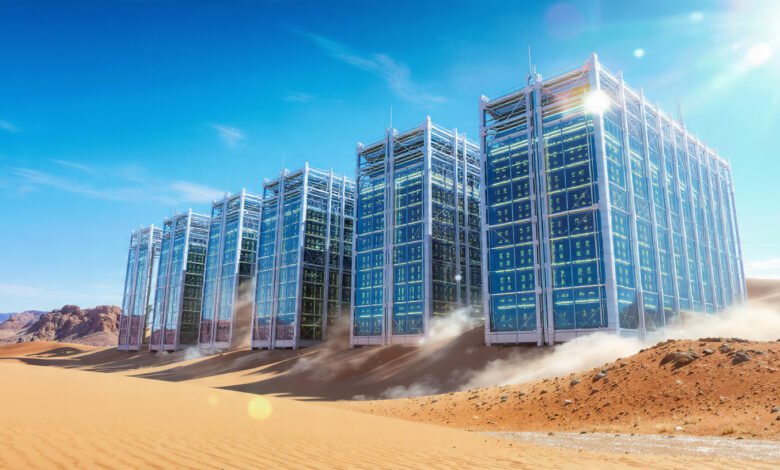
AI data centers are no longer a background story in tech. They are the story. Over the past two years, the physical infrastructure that powers artificial intelligence has gone from a niche concern to one of the most consequential developments in the global economy.
The numbers tell you something is happening at an unusual scale. Tech giants spent roughly $580 billion in 2025 turning empty fields, deserts, and abandoned factories into facilities packed with GPUs, cooling systems, fiber networks, and dedicated substations. That is not the kind of number that gets explained away by normal business cycles. It reflects a genuine structural shift in how the world’s most powerful companies are allocating capital.
What is driving it is not hard to understand. Training and running large language models, image generators, and AI inference workloads requires processing power that dwarfs anything the industry has seen before. Standard servers are not built for this. Standard power grids are struggling to keep up. Even the way buildings are cooled needs to be rethought from the ground up.
This article breaks down exactly what is happening to AI data center infrastructure, why Big Tech is spending at this scale, what problems they are running into, and where the whole thing is headed. Whether you’re a business leader, a tech professional, or just someone trying to make sense of the headlines, this is the context you need.
The Explosive Growth of AI Data Centers in 2025
The scale of investment in AI data centers that occurred in 2025 was genuinely historic, and it is accelerating into 2026.
Alphabet, Amazon, Microsoft, and Meta planned to invest over $350 billion in data centers in 2025 and roughly $400 billion in 2026. To put that in perspective, that is more than the GDP of many mid-sized countries, directed almost entirely at computing infrastructure.
The Stargate Project, formed in January 2025 by OpenAI, SoftBank, Oracle, and MGX, announced plans to invest $500 billion over four years into building new AI infrastructure in the United States. The announcement was made at the White House, with OpenAI CEO Sam Altman and Oracle’s Larry Ellison flanking President Trump, which gives you a sense of how central this infrastructure has become to national economic policy.


A December 2025 report found the U.S. had 4,149 active data centers, with 2,788 more announced or under construction.
Why the Demand is So Relentless
Part of what makes AI data center demand so hard to satisfy is that it keeps changing shape. Training a large AI model is enormously compute-intensive, but it happens once (or periodically). Inference workloads, which are what happen every time a user gets a response from an AI system, are becoming the dominant requirement, and unlike training, they never stop.
AI made up about a quarter of all data center workloads in 2025. By 2030, AI could handle half of all workloads, with inference leading the way.
This shift matters because inference requires low latency. Users expect fast responses, which means compute cannot just live in massive centralized campuses in Nevada or Virginia. It needs to move closer to where people actually are. That is driving a secondary buildout of edge AI infrastructure that adds another layer of complexity and cost to the overall picture.
How AI Is Fundamentally Changing Data Center Design
If you walked into a standard data center from five years ago and then walked into one being built today for AI workloads, you would notice the difference immediately. These are not the same kinds of buildings.
GPU Density and Specialized Hardware
Traditional data centers were built around general-purpose servers that run web applications, store files, and handle business software. AI data centers are built around graphics processing units (GPUs), which are far more power-hungry and generate significantly more heat per square foot.
The average facility already uses as much electricity as 100,000 homes, with the largest new sites expected to consume 20 times that.
Nvidia’s chips, in particular the H100 and the newer Blackwell architecture, have become the critical hardware at the center of this buildout. Access to these chips became so strategically important that governments began treating them as national security assets and imposing export controls.
Liquid Cooling Is Replacing Traditional Air Systems
One of the most significant engineering changes in AI data center design is the shift toward liquid cooling systems. Traditional air cooling simply cannot remove heat fast enough from dense GPU clusters.
Liquid cooling comes in several forms, including direct-to-chip cooling where coolant runs directly over processors, and full immersion cooling where entire servers are submerged in non-conductive fluid. Both approaches are far more efficient than air cooling at these power densities, but they also require fundamentally different facility designs and significantly more upfront capital.
Supply chain challenges persist, with confidence in meeting delivery schedules for advanced cooling and power systems remaining low. The specialized equipment needed to build these facilities is itself in short supply, which is one of the less-discussed bottlenecks in the broader AI buildout.
Power Architecture and High-Voltage Connections
AI data center facilities house specialized graphics processing units and need high-voltage power connections to run. U.S. spending on data center construction has tripled in the last three years.
The power architecture inside these buildings has to be redesigned to support the density and reliability requirements of AI workloads. Many facilities are now built with dedicated substations, backup power systems capable of sustaining full load for extended periods, and increasingly, on-site generation capacity.
The Big Tech Players Driving AI Infrastructure Investment
The AI data center buildout is not evenly distributed. A small number of companies control a disproportionate share of the investment and the capacity being created.
Microsoft, Google, Amazon, and Meta
These four companies, often called hyperscalers, are the dominant forces in AI infrastructure construction right now.
The main economic actors in the data center build-out are hyperscalers such as Microsoft, Alphabet, and Meta, which provide large-scale cloud computing services. Their central role in the AI and data center race represents an interesting twist in their macro story. Historically, the tech industry has been viewed as human capital-heavy with a light capital expenditure footprint. However, with the build-out of large data centers and the race for AI dominance, the tech firms’ macro footprint is starting to resemble that of manufacturing.
Microsoft has been particularly aggressive, investing heavily in dedicated capacity for OpenAI’s models through its Azure cloud platform, including the ambitious Project Rainier.
Meta broke ground on its 30th data center in Beaver Dam, Wisconsin, announced a new plant for El Paso, Texas, and its $1 billion Kansas City, Missouri, plant became operational in 2025.
Amazon Web Services committed $100 billion to expanding its Generative AI Innovation Center.
Beyond Big Tech: New Players Entering the Space
One of the more interesting dynamics of 2025 was how the AI data center gold rush attracted participants well beyond the established cloud giants.
Thousands of newcomers with little to no computing capacity are hoping to claim a piece of the AI infrastructure gold rush. Their emergence marks a fundamental shift in data center dominance away from Big Tech and points to a new set of heightened risks from the global infrastructure buildout as less experienced firms join the fray.
At least $178.5 billion of data center credit deals in the U.S. alone were struck in 2025, according to figures compiled by Bloomberg News.
McKinsey predicted that 70% of the $7 trillion in projected global data center capital expenditures through 2030 would be spent by hyperscalers. The remaining 30% represents an enormous opportunity for colocation providers, independent operators, and new entrants.
The Power Problem — AI’s Biggest Infrastructure Challenge
If there is a single issue that could slow the AI data center buildout more than any other, it is power. Building the physical structures is hard. Getting enough electricity to run them reliably is proving to be even harder.
Grid Strain and Energy Demand
Power capacity needs are expected to jump from about 30 GW in 2025 to 90 GW or more by 2030, growing at 22% per year.
Goldman Sachs Research expects power needs from data centers to rise by 50% by 2027 and reach a staggering 165% growth by 2030 compared to 2023 levels.
Electric and gas utility capital expenditure is expected to surpass $1 trillion cumulatively within the next five years for the 47 biggest investor-owned utilities. That is a level of infrastructure spending that reshapes the entire energy sector.
The challenge is not just the total amount of power required. It is the reliability requirement. AI inference workloads cannot tolerate power interruptions. A facility running thousands of GPUs processing real-time requests needs power that is consistent, stable, and available 24 hours a day, seven days a week. That requirement is harder to meet from renewable sources, which are inherently intermittent.
Nuclear Power and Alternative Energy Sources
To secure reliable, 24/7 electricity, tech companies are increasingly turning to nuclear power, including plans to reopen shuttered plants like Three Mile Island by 2028 following a $1.6 billion overhaul, alongside long-term energy deals.
Small modular reactors (SMRs) have emerged as a technology that the data center industry is watching closely, because they could theoretically provide reliable, low-carbon baseload power at a scale that matches facility needs.
Interest has continued to grow around the potential of nuclear-powered data centers and small modular reactors to solve the industry’s mounting power and sustainability challenges. Despite hopeful enthusiasm, widespread commercial deployment remains years away.
More than 40 percent of U.S. data centers currently run on natural gas, compared with 24 percent on renewables, 20 percent on nuclear, and 15 percent on coal. That distribution is likely to shift, but the transition will take time.
On-Site Generation and Microgrids
Given the difficulty of securing reliable grid power, many AI data center operators are moving toward on-site generation. Natural gas turbines, backup diesel generators scaled for primary use, and microgrid configurations are all being explored as ways to ensure the consistent power supply that AI workloads demand.
Some operators are exploring on-site renewable generation, natural gas turbines, and microgrid technologies to reduce reliance on strained grids.
Environmental Concerns and the Sustainability Challenge
The environmental footprint of AI data centers is one of the most contested topics in the technology industry right now, and the debate is getting more pointed as the scale of investment grows.
Carbon Emissions and Net-Zero Commitments
The major tech companies have all made net-zero pledges. The credibility of those pledges is increasingly being questioned.
Even the best-case scenarios project massive water use and carbon emissions comparable to those of entire countries. At this rate, it’s unlikely that the major names in AI will meet their 2030 net-zero pledges.
The honest version of the situation is that AI infrastructure has a significant carbon footprint, and scaling that infrastructure as rapidly as the current investment trajectory demands is in real tension with the environmental commitments these companies have made publicly.
Water Usage
Liquid cooling systems are far more efficient than air cooling for handling heat at GPU densities, but many of these systems use water. A large AI data center campus can consume millions of gallons of water per day, and that is generating real friction with local communities, especially in arid regions where water scarcity is already an issue.
Community Opposition
An industry survey found that while 93% of Americans recognize the importance of AI data centers, only 35% support their construction in their communities. Concerns center on environmental impact, energy consumption, water usage, and land use. Only 9% of respondents believed local advantages outweigh environmental concerns.
That gap between abstract support and local acceptance is a real operational challenge for developers. Zoning regulations are emerging as a critical barrier to data center expansion, as many local land-use codes neither explicitly allow nor clearly prohibit data centers, meaning projects can become entangled in ambiguous rules and lengthy approval processes.
The Macroeconomic Impact of AI Data Center Investment
The AI data center buildout is not just a tech story. It is becoming a significant driver of broader economic activity.
Data centers and related high-tech investment activities have recently become a key driver of U.S. growth. Estimates suggest that 80% of the increase in final private domestic demand in the first half of 2025 is attributable to data centers and related high-tech spending.
That is a striking figure. It means the AI infrastructure boom is not just reshaping the tech sector. It is reshaping the macroeconomic environment in measurable ways.
Most high-tech hardware used in U.S. data centers is imported, with the surge beginning in late 2023. The main beneficiary economies have been Taiwan and Mexico, though Malaysia and South Korea have also seen recent increases.
The construction of the 2,788 data centers announced or under construction in the U.S. will create roughly 4.7 million temporary construction-related jobs.
The Risk of Overbuilding
Not everyone believes the current pace of investment is sustainable. There are legitimate questions about whether demand will grow fast enough to justify the capacity being built.
Over time, Oaktree Capital Management co-founder Howard Marks warns that the risk of an overbuild looms large. Tech firms who’ve built flexibility into their leases threaten to leave site owners holding the bag if they back out of their contracts.
Companies now face a tough choice: they risk stranded assets by overinvesting or falling behind competitors by underinvesting. Power constraints, not capital limitations, create the main bottleneck for building data centers.
What Comes Next — AI Data Center Trends Through 2030
The near-term trajectory of AI data center development is fairly clear. The longer-term picture is more uncertain but directionally consistent.
Inference Centers and Edge AI
In 2026, the focus shifts to execution: bringing inference centers closer to users, implementing power constraints, and prioritizing regulation and efficiency over sheer scale.
Edge AI infrastructure is becoming more important as companies recognize that centralized campuses cannot deliver the latency that real-time AI applications require. Distributing compute capacity across smaller, regionally placed facilities is the next phase of the buildout.
Investment Projections Through 2030
The numbers being projected for the next five years are genuinely extraordinary:
- Data centers will require a $6.7 trillion investment by 2030 to match the growing compute power needs, representing the biggest infrastructure investment cycle in modern history.
- The global need for data center capacity might triple by 2030.
- Big tech companies will likely control about 70% of the expected capacity in the U.S. market.
For anyone working in construction, energy, real estate, hardware manufacturing, or telecommunications, the AI data center buildout represents one of the defining business opportunities of this decade.
Quantum Computing and Next-Generation Infrastructure
2025 saw major advancements in quantum computing, such as Google’s claim that it produced a quantum chip capable of performing 13,000 times faster than conventional machines. Data center operators who believe quantum practicality is approaching might respond by investing in quantum-ready infrastructure.
Quantum computing is unlikely to displace GPU-based AI infrastructure in the near term, but it is increasingly on the roadmap for forward-looking operators.
How Businesses Should Think About AI Infrastructure
For companies that are not themselves building data centers, the AI data center buildout has direct practical implications.
- Access to AI compute is increasingly a competitive resource. Companies that secure dedicated capacity or strong cloud relationships will have an advantage over those who treat it as a commodity.
- Data sovereignty regulations are forcing companies to think about where their AI workloads actually run, not just which vendor they use.
- Energy costs inside AI data centers are significant and rising. For AI-intensive businesses, understanding and managing compute costs is becoming as important as managing other major operational expenses.
- Reliability and redundancy are baseline requirements for production AI systems. Understanding the infrastructure underpinning your AI stack matters.
According to Equinix’s analysis, AI-ready data center infrastructure that supports sufficient power and networking is essential for enterprises looking to integrate AI meaningfully into their operations, not just run experiments.
For a rigorous look at the macroeconomic and investment dynamics behind this shift, Deloitte’s comprehensive analysis of data center infrastructure and AI investment is one of the more thorough resources available.
Conclusion
The rise of AI data centers is one of the most consequential infrastructure stories of the current era, touching everything from energy policy and environmental regulation to geopolitical competition and local land use. Big Tech is spending at a scale that has no clear historical precedent, building facilities that require rethinking power delivery, cooling systems, hardware architecture, and physical location strategy from the ground up. The challenges are real: grid constraints, water usage, community opposition, and the genuine risk of overbuilding all complicate a picture that looks deceptively simple when described purely in terms of investment dollars. What is clear is that AI infrastructure is not a passing phase or a temporary investment cycle. The shift from training-focused to inference-focused workloads means the demand for data center capacity will not recede as AI models mature; it will grow. Whether you are a business leader, an infrastructure professional, or an investor, understanding what is being built, why it is being built that way, and what constraints are shaping its development is essential context for the next decade.


